Skip to content






Statue Cleaning in London: Restoring the Historic King William IV Monument in Greenwich
How LBC Exterior Cleaning uses specialist DOFF steam cleaning to care for historic statues, stone monuments and heritage landmarks across London.
London is home to thousands of historic statues, memorials and monuments, each telling a story about the city’s remarkable past. However, years of exposure to pollution, weathering, biological growth and environmental contaminants can leave these important landmarks looking tired and discoloured.
At LBC Exterior Cleaning, we specialise in professional statue cleaning and monument cleaning throughout London and the Home Counties, using carefully selected techniques to remove unwanted surface contamination while respecting the materials beneath.
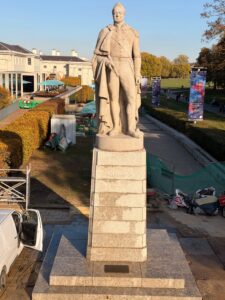
One of our recent projects took us to Greenwich, where our team carried out specialist DOFF steam cleaning on the historic King William IV statue, situated beside the National Maritime Museum.
This Grade II listed monument is more than 180 years old and provides a fascinating example of why historic stonework requires a considered approach to cleaning.
The History of the King William IV Statue in Greenwich
Standing near the St Mary’s Gate entrance to Greenwich Park, beside the National Maritime Museum, the imposing granite statue of King William IV is one of the area’s notable historic landmarks.
Created in 1844 by sculptor Samuel Nixon, the statue depicts King William IV dressed in the uniform of a high admiral, reflecting his distinguished naval background.
William IV, born in 1765, was the third son of King George III. Before becoming King of the United Kingdom in 1830, he served in the Royal Navy, earning the nickname “The Sailor King”.
His naval career makes Greenwich a particularly fitting location for the monument, given the area’s longstanding association with Britain’s maritime history.
Interestingly, the statue was not originally located in Greenwich.
It first stood on King William Street in the City of London, near London Bridge. During the 1930s, changes to London’s road network and increasing motor traffic led to its relocation.
The statue was moved to Greenwich in the mid-1930s, where it has remained ever since.
Carved from approximately 20 tonnes of solid granite, the monument is an impressive example of nineteenth-century stone sculpture.
Today, it is recognised as a Grade II listed monument, highlighting its architectural and historical significance.
Professional Statue Cleaning at the National Maritime Museum, Greenwich
LBC Exterior Cleaning recently undertook specialist cleaning works on the King William IV statue using our DOFF steam cleaning equipment.
Historic monuments are continually exposed to environmental conditions that can gradually change their appearance.
Over time, stone statues may accumulate:
Atmospheric pollution and carbon-based deposits
Algae, moss and lichen
General dirt and environmental grime
Organic staining caused by surrounding vegetation
Bird droppings and biological contamination
Surface discolouration from prolonged weather exposure
These deposits can obscure fine details and affect the overall presentation of a monument.
For a historic granite sculpture such as King William IV, selecting an appropriate cleaning method is particularly important.
Our team used specialist DOFF equipment as part of the cleaning process, with the aim of improving the appearance of the stonework while taking account of its historic character.
The project demonstrates the importance of using experienced contractors who understand that heritage cleaning is very different from ordinary pressure washing.
Why DOFF Steam Cleaning Is Used for Historic Statues
DOFF steam cleaning is a specialist system widely used in the conservation and maintenance of historic buildings, monuments and architectural stonework.
Unlike conventional high-pressure washing, DOFF systems use superheated water delivered at a controlled pressure.
The equipment can produce water temperatures of up to approximately 150°C at the heating unit, although the temperature reaching the surface depends on operating conditions.
This combination of heat and controlled water delivery can be effective at removing certain types of surface contamination.
Benefits of DOFF Cleaning for Stone Monuments
1. Controlled cleaning
The pressure and cleaning technique can be adjusted according to the surface material, condition and approved cleaning specification.
2. Removal of biological growth
DOFF cleaning can help remove algae, moss and other biological contamination from suitable stone surfaces.
3. Reduced reliance on chemicals
Heat-based cleaning can reduce or eliminate the need for chemical cleaning products in some applications.
4. Suitable for selected heritage applications
Where approved following appropriate assessment and testing, DOFF can provide an effective method for cleaning historic masonry and stone features.
5. Improved appearance
Removing accumulated surface contamination can help reveal architectural detailing and improve the presentation of statues and monuments.
Importantly, no single cleaning method is suitable for every historic surface. Listed monuments require careful assessment, appropriate permissions where applicable and a conservation-led approach.
Why Historic Statue Cleaning Requires Specialist Knowledge
Cleaning a modern concrete feature is very different from working on a nineteenth-century listed granite monument.
Historic statues can be manufactured from granite, limestone, sandstone, marble, bronze, cast iron and other materials, each requiring a different approach.
Incorrect cleaning techniques can result in irreversible damage, including surface erosion, staining, loss of original finishes and deterioration of delicate carved details.
For example, excessive pressure on softer stone can remove the original surface and accelerate future weathering.
Similarly, inappropriate chemicals can react with certain materials, potentially causing discolouration or damage.
At LBC Exterior Cleaning, we recognise the importance of assessing each project individually before recommending a suitable cleaning method.
Depending on the monument and its condition, our services can involve controlled steam cleaning, carefully specified pressure washing or other specialist cleaning techniques.
For protected or particularly sensitive monuments, we work to the relevant conservation requirements and approved methods.
Our objective is not simply to make a statue look cleaner, but to help maintain its appearance without unnecessarily compromising its historic fabric.
Statue and Monument Cleaning Services Across London
LBC Exterior Cleaning provides specialist exterior cleaning services for a wide range of public, commercial and heritage environments.
Our statue and monument cleaning capabilities include:
Historic statue cleaning – cleaning suitable stone statues and sculptural features.
War memorial cleaning – maintenance of commemorative stonework and memorial structures.
Public monument cleaning – cleaning civic monuments, plinths and public artworks.
Heritage stone cleaning – specialist cleaning for listed buildings and historically significant masonry.
Church and cemetery monument cleaning – sensitive cleaning of suitable memorial stonework and architectural features.
Graffiti removal – assessment and removal of unwanted graffiti from compatible stone and masonry surfaces.
Architectural stone cleaning – cleaning decorative carvings, columns, plaques and external stone features.
We work with property managers, facilities management companies, local authorities, commercial organisations and heritage property stakeholders.
Our access capabilities, including rope access and mobile elevated work platforms, also allow us to assess cleaning projects involving difficult-to-reach locations.
How Much Does Professional Statue Cleaning Cost?
The cost of statue cleaning in London depends on several factors.
These include the size of the monument, its construction material, the level and type of contamination, accessibility, heritage restrictions and the cleaning technique required.
Smaller accessible monuments may require relatively straightforward cleaning, while large historic sculptures can involve specialist access equipment, conservation assessments, test cleaning and additional protection measures.
For listed monuments, any necessary consents and conservation requirements must also be considered.
We recommend arranging a site survey before commissioning cleaning works, particularly for historically significant structures.
LBC Exterior Cleaning can assess the project and provide a tailored quotation based on the monument’s specific requirements.
Looking After London’s Historic Monuments
London’s statues and memorials form an important part of the city’s cultural and architectural heritage.
From historic royal monuments in Greenwich to war memorials, public sculptures and commemorative stonework throughout the capital, these structures deserve appropriate care and maintenance.
Our recent DOFF steam cleaning project at the King William IV statue highlights the specialist considerations involved in maintaining historic stone monuments.
With the right equipment, knowledge and cleaning specification, it is possible to improve the appearance of many historic surfaces while respecting their age and significance.
Need Professional Statue Cleaning in London?
If you are responsible for maintaining a historic statue, public memorial, stone monument or heritage property, LBC Exterior Cleaning can help.
We provide specialist exterior cleaning services across Greater London and the Home Counties, including Greenwich, Westminster, Kensington, Camden, Islington and surrounding areas.
Whether you require a one-off monument clean or a planned maintenance programme, our team can assess your requirements and recommend a suitable approach.
Contact LBC Exterior Cleaning today to arrange a free initial consultation and discuss your statue or monument cleaning project.
Visit: www.lbcclean.co.uk
LBC Exterior Cleaning – Create cleaner, healthier places.