Skip to content




Wet pour rubber surfaces are designed to provide a safe, durable and impact-absorbing surface for playgrounds, schools, nurseries, parks and recreational areas.
But like any outdoor surface, wet pour rubber needs regular professional cleaning.
Over time, dirt, algae, moss, organic growth and general contamination can build up across the surface. This doesn’t just make a playground look tired and neglected — contamination can make the surface slippery, restrict drainage and potentially shorten the life of the wet pour.
At LBC Exterior Cleaning, we provide professional wet pour rubber cleaning and playground surface cleaning across London and the UK, helping schools, councils, property managers, facilities management companies and commercial organisations restore their rubber surfaces.
Watch Us Professionally Clean a Wet Pour Playground
Want to see the difference professional wet pour cleaning can make?
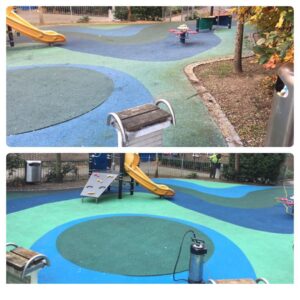
Watch our team transform a heavily contaminated playground surface:
The difference can be dramatic. Areas that initially appear permanently stained or discoloured can often be significantly restored through the correct cleaning process.
What Is Wet Pour Rubber?
Wet pour — also known as wetpour, rubber crumb surfacing, EPDM rubber surfacing or playground safety surfacing — is an impact-absorbing rubber surface commonly installed around children’s play equipment.
It is frequently found in:
- School playgrounds
- Nurseries
- Children’s play areas
- Public parks
- Housing developments
- Council playgrounds
- Holiday parks
- Hotels
- Leisure facilities
- SEN schools and facilities
- Outdoor recreational areas
Wet pour normally consists of rubber granules combined with a polyurethane binder to create a continuous, cushioned surface.
One of its major advantages is that it can be porous, allowing rainwater to drain through the surface rather than remaining on top.
However, those same characteristics mean the surface needs to be cleaned correctly.
Why Does Wet Pour Rubber Get So Dirty?
Outdoor wet pour is constantly exposed to the British weather.
Rain, moisture, shade and nearby vegetation can create ideal conditions for algae, moss and organic contamination to develop.
Common contaminants include:
- Green algae
- Moss
- Dirt and mud
- Leaves
- Bird droppings
- Atmospheric pollution
- Food and drink spillages
- Chewing gum
- General playground contamination
Shaded areas can be particularly problematic because they remain damp for longer.
You may also notice that the perimeter of a playground becomes significantly greener than heavily trafficked areas.
Industry guidance specifically identifies moss and algae as maintenance issues for wet pour surfaces and recommends preventative maintenance rather than allowing heavy growth to become established.
Can You Pressure Wash Wet Pour Rubber?
Yes — wet pour rubber can be pressure washed, but it needs to be done carefully.
This is one of the most important things to understand about wet pour cleaning.
Simply attacking a rubber playground with the most powerful pressure washer available is not the correct approach.
Excessive pressure or incorrect technique could damage an already weakened surface, particularly where the rubber has deteriorated, cracked or started separating.
Professional cleaning should therefore begin with an assessment of the surface.
The cleaning method can then be adjusted according to:
- Age of the surface
- Condition of the rubber
- Level of contamination
- Existing cracks or damage
- Type of wet pour
- Drainage
- Surrounding environment
Manufacturer guidance can also specify maximum pressures and cleaning techniques. For example, CONICA’s published cleaning guidance recommends assessing surface integrity before pressure washing and states that any necessary repairs should ideally be completed beforehand.
The objective isn’t to use as much pressure as possible — it’s to achieve the best clean possible without unnecessarily damaging the rubber.
Our Wet Pour Rubber Cleaning Process
Every site is different, but a professional wet pour cleaning project will typically involve several stages.
1. Surface Inspection
Before cleaning starts, we inspect the playground and identify obvious defects, damaged areas, contamination and potential problem areas.
Particular attention can be given to cracks, loose rubber, soft areas and damaged edges.
2. Removal of Loose Debris
Leaves, litter and loose organic material should be removed before deep cleaning begins.
This also helps expose areas where algae and moss have become established.
3. Treatment of Organic Contamination
Where appropriate, specialist cleaning products can be used to help break down algae, moss and other biological contamination.
Products and methods need to be appropriate for the surface, location and surrounding environment.
4. Controlled Pressure Cleaning
The wet pour is systematically cleaned using appropriate pressure, water flow and cleaning equipment.
Our technicians work methodically across the area to provide an even finish while taking care not to unnecessarily damage the rubber.
5. Detail Cleaning
Edges, corners, playground equipment and other difficult areas may require additional attention.
These are often the places where algae and contamination are particularly noticeable.
6. Final Inspection
Once cleaning has been completed, the area can be inspected again and any surface defects or maintenance concerns identified.
Why Is Regular Wet Pour Cleaning Important?
Professional wet pour cleaning isn’t purely cosmetic.
Improve Appearance
Dirty wet pour can look dramatically older than it actually is.
Removing years of contamination can restore much of the original colour and completely transform the appearance of a playground.
Reduce Slippery Organic Growth
Algae and moss can contribute to slippery surface conditions.
Removing this contamination is therefore an important part of maintaining outdoor play surfaces.
Help Maintain Drainage
Wet pour surfaces can be porous.
Dirt and organic material accumulating within the surface can interfere with its ability to drain effectively. Regular removal of debris and periodic deep cleaning help keep the pore structure clearer.
Protect Your Investment
Replacing an entire wet pour playground can be expensive.
A sensible inspection, cleaning and maintenance programme can help identify problems earlier and keep an existing surface serviceable for longer.
Improve First Impressions
For schools, nurseries, hotels, residential developments and public facilities, the condition of outdoor areas makes an immediate impression.
A professionally cleaned playground looks brighter, better maintained and more inviting.
How Often Should Wet Pour Rubber Be Professionally Cleaned?
There isn’t one cleaning frequency suitable for every playground.
As a general guide, professional wet pour cleaning should normally be considered approximately once or twice per year, although some sites may require more frequent attention.
The ideal frequency depends on factors including:
- Number of people using the area
- Amount of shade
- Nearby trees
- Drainage
- Local environment
- Age and condition of the surface
- Previous maintenance
- Severity of algae and moss growth
A shaded school playground surrounded by trees, for example, may require more frequent cleaning than an open playground receiving plenty of sunlight.
Routine sweeping between professional cleans is also extremely useful.
When Is the Best Time to Clean Wet Pour?
Wet pour can be cleaned at different times of year, although many organisations choose to schedule work around operational requirements.
For schools and nurseries, school holidays can provide an excellent opportunity because disruption is minimised.
Spring cleaning can remove contamination accumulated during winter, while an autumn or pre-winter maintenance clean can remove organic debris and contamination before wetter weather.
LBC can arrange works around the operational requirements of schools, commercial properties and public spaces.
Can You Remove Green Algae From Wet Pour?
Yes. Green algae is one of the most common reasons clients contact us about wet pour cleaning.
It is particularly common in shaded and damp areas.
A combination of suitable treatment and controlled professional cleaning can remove significant algae contamination and dramatically improve the appearance of the surface.
Treating algae before it becomes heavily established is generally preferable to waiting until large areas become green and slippery.
Can You Remove Moss From Rubber Playground Surfaces?
Yes.
Moss commonly develops around playground edges and other areas receiving less foot traffic.
The correct treatment will depend on the condition of the surface and severity of growth.
Simply using extremely high pressure to blast moss away isn’t necessarily the best solution because excessive pressure can potentially damage the rubber.
Will Pressure Washing Damage Wet Pour?
Incorrect pressure washing can damage wet pour. Professional cleaning should therefore use pressure, flow, equipment and techniques appropriate to the condition of the surface.
Older or already damaged wet pour requires particular care.
Before cleaning, areas suffering from cracks, loose rubber, failed edges or deterioration should be identified.
Where significant damage exists, repair may be advisable before intensive cleaning takes place.
Can You Clean Old Wet Pour Rubber?
Absolutely.
In fact, older surfaces can often produce some of the most impressive transformations.
A playground that appears faded or badly discoloured may actually be covered in years of atmospheric dirt and biological growth.
Professional cleaning can reveal how much of the original surface remains underneath.
However, cleaning cannot reverse physical deterioration.
If rubber has broken away, cracked or structurally failed, those areas may require repair rather than cleaning alone.
How Much Does Wet Pour Rubber Cleaning Cost?
The cost of professional wet pour cleaning depends on several factors rather than simply the square meterage.
These include:
- Total surface area
- Condition of the playground
- Severity of algae or moss
- Accessibility
- Water availability
- Amount of furniture or play equipment
- Required cleaning treatment
- Location
- Whether additional specialist cleaning is required
Larger areas can often achieve a lower square-metre rate because mobilisation and setup costs are spread across a greater area.
LBC Exterior Cleaning provides site-specific quotations for wet pour and playground cleaning projects.
Send us photographs, measurements or site details and our team can advise on the most appropriate cleaning solution.
How Long Does Wet Pour Cleaning Take?
This depends heavily on the size and condition of the surface.
A relatively small playground may potentially be completed within a day, while large school, council or commercial sites may require several days.
Heavy moss and algae contamination will generally require more preparation and cleaning than a regularly maintained surface.
For operational sites, LBC can discuss phasing the work to minimise disruption.
Can Wet Pour Be Cleaned During School Holidays?
Yes.
School holidays are often an ideal opportunity to carry out professional playground cleaning.
LBC regularly works within commercial and managed environments and can plan cleaning around site access requirements.
For schools, nurseries and educational facilities, scheduling wet pour cleaning during half-term, Easter, summer or other holidays can significantly reduce disruption.
Can You Clean Playground Equipment at the Same Time?
Depending on the site requirements, additional exterior cleaning can often be carried out alongside the wet pour cleaning.
Combining services can make commercial sense because equipment, technicians and site setup are already in place.
Speak to LBC about the wider cleaning requirements when requesting your quotation.
Wet Pour Cleaning for Schools, Councils & Commercial Properties
LBC Exterior Cleaning works with commercial and public-sector organisations across London and the UK.
We can provide wet pour and playground surface cleaning for:
- Schools and academies
- Nurseries
- Local authorities
- Housing associations
- Property management companies
- Facilities management companies
- Hotels and holiday parks
- Leisure facilities
- Public parks
- Residential developments
- Main contractors
For larger estates or organisations managing multiple locations, we can also discuss planned or periodic cleaning programmes.
Frequently Asked Questions About Wet Pour Cleaning
What is the best way to clean wet pour rubber?
Wet pour should be regularly cleared of loose debris and periodically deep cleaned using appropriate cleaning products and controlled pressure washing. The exact method should take account of the manufacturer’s guidance and condition of the surface.
Can I jet wash a rubber playground?
Wet pour can generally be pressure washed, but excessive pressure and incorrect technique may cause damage. Professional cleaning is advisable, particularly on older or heavily contaminated surfaces.
Why has my wet pour turned green?
Green colouring is commonly caused by algae or other organic growth. Damp, shaded areas are particularly susceptible.
Is green wet pour slippery?
Algae, moss and other contamination can reduce the slip resistance of outdoor surfaces, which is one reason regular cleaning is important.
How often should wet pour be cleaned?
The appropriate frequency depends on usage and environmental conditions, but professional cleaning once or twice per year is a useful general guideline for many sites.
Can black wet pour become colourful again?
Cleaning cannot reverse UV fading or physical deterioration, but removing accumulated dirt and organic contamination can significantly improve the original colour and appearance.
Can pressure washing ruin rubber surfacing?
It can if excessive pressure or poor technique is used. Wet pour should be inspected first and cleaned using a method suitable for the specific surface.
Can you remove moss and algae?
Yes. Moss and algae removal is one of the main reasons professional wet pour cleaning is required.
Does cleaning improve wet pour drainage?
Cleaning helps remove debris and contamination that can block the porous structure of some wet pour systems, helping the surface drain as intended.
Do you clean wet pour throughout the UK?
Yes. LBC Exterior Cleaning provides specialist commercial exterior cleaning services across London and throughout the UK. Contact our team with your location, approximate area and photographs of the surface and we can advise on your project.
Get a Quote for Professional Wet Pour Rubber Cleaning
If your playground or rubber surface has become green, dirty, slippery or heavily contaminated, replacement may not be the first answer.
Professional cleaning can produce a dramatic transformation.
LBC Exterior Cleaning provides professional wet pour rubber cleaning, playground cleaning and specialist exterior cleaning services across London and the UK.
Whether you manage a single school playground or hundreds of sites across a national estate, our team can provide a cleaning solution appropriate to your property.
Request a free quotation today.
Send us:
- Your site location
- Approximate square meterage
- Photographs or videos of the surface
- Preferred completion dates
Our team will review the information and recommend the most appropriate approach.
LBC Exterior Cleaning — Professional Wet Pour Rubber Cleaning Across London & the UK.