Skip to content




In March 2026, a pest controller named Kevin Newell opened a hotel window in Nottingham and counted ten dead pigeons slowly rotting in bird netting stretched across the building’s facade. The story went viral. Campaigns have sprung up calling for an outright ban on bird netting in the UK. As the founder of a company whose entire purpose is creating cleaner, healthier places for people to live — I want to say something that might surprise you: they’re not wrong. They’re just aiming at the wrong target.
The BBC covered the Nottingham story. The RSPCA says it receives over 2,000 calls a year about wild birds trapped behind or in building netting. The RSPB has weighed in. Animal welfare groups are mobilising.
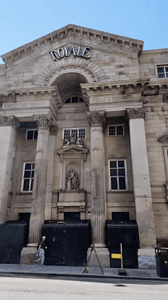
The Nottingham case
The Mercure Hotel’s netting had been in place for approximately 18 months. TripAdvisor reviews show the hotel was aware of the problem since at least August 2025 — seven months before the story broke. There is no indication it was inspected regularly. If it had been, the story never happens.
Where we stand on bird netting
We offer bird netting as a service at LBC. We believe in it when it’s done right. Bird fouling (guano) is a genuine health hazard. It carries pathogens including Salmonella, E. coli and Ornithosis. It is acidic, and it degrades building fabric over time. On older London stock — Victorian brick, heritage stone, listed facades — accumulated guano causes real, expensive, sometimes irreversible structural damage.
Building owners and property managers have a legal duty to maintain safe, hygienic premises. On a busy commercial building in central London, “just leave the pigeons to it” is not a responsible or realistic answer.
Netting, installed correctly and maintained properly, is 100% effective as a physical exclusion method. It doesn’t harm birds. It redirects them. That’s the whole point.
But the Nottingham story isn’t really about netting. It’s about a hotel that installed it, forgot about it, watched it degrade over 18 months, received complaints, promised a fix, did nothing, and left wild animals to die in the gap between intention and follow-through. That’s not a netting problem. That’s a maintenance and accountability problem. And it’s one our industry needs to own.
What “done right” actually looks like
The difference between netting that works humanely and netting that becomes a death trap comes down to three things: specification, installation and maintenance.
Specification means choosing the right product for the right application. Mesh size matters enormously:
50mm
Pigeons
28mm
Starlings
19mm
Sparrows
The wrong mesh for the species present creates exactly the gap that allows a bird to enter and then become trapped. Flimsy wide-mesh nylon, installed across a large expanse with insufficient tension, sags over time. Gaps open. And once a bird gets in, it often can’t find its way back out.
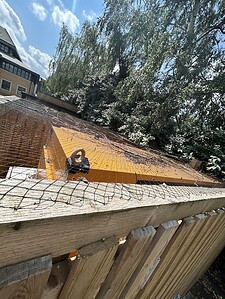
Installation is where most problems begin. Netting on a building is not a DIY job, and it’s not a job for an unqualified contractor doing it cheaply to win a tender. It needs to be fixed securely, without gaps at fixings or edges, tensioned correctly for the span and the expected wind load, and crucially it needs to allow for access by maintenance teams. Nets installed so tightly against a building surface that inspection is impossible are nets that will eventually fail.
Maintenance is the part the industry too often skips.
Maintenance standard
The RSPB’s position is clear: if netting is used, it should be inspected at least once a day. At minimum, commercial buildings should carry out monthly checks and no less than quarterly inspections. A net is not a fit-and-forget solution. It’s infrastructure, and it degrades like all infrastructure.
What we do differently
We are an exterior cleaning and rope access company. Part of our work is cleaning guano. Part of it is installing bird control systems to reduce the guano in the first place. We have our own cherry picker. Our teams are IPAF and PASMA trained. We work at height on buildings where no one else wants to go.
When we install netting, we do it properly. We specify the right product. We install it without gaps. We offer maintenance programmes. We can access the netting after installation because we build access into the design.
We also have conversations with clients where we tell them that netting might not be the right answer. Where the structure makes regular inspection genuinely impossible, or where there is already a nesting colony established (netting over an active nest is both illegal and cruel), we recommend alternatives: spikes for ledge perching, tensioned wire systems for discreet protection on heritage buildings, acoustic deterrents, or in some cases simply accepting that a regular cleaning programme is more practical than exclusion.
There is no single right answer. There is only the right answer for the specific building, the specific species, the specific situation.
What I’d say to the campaigners
I respect what Kevin Newell is doing. He has been a pest controller for 13 years. He saw something that made him angry, and he’s channelling that anger into trying to change the industry. I understand that impulse completely.
But banning netting outright would not solve the problem. It would push property owners toward alternatives that are less regulated, less visible, and in some cases more harmful. It would leave building managers with a genuine pigeon fouling problem and no legal tools to address it.
What the campaigners are really asking for — even if they don’t frame it this way — is accountability. Mandatory inspection regimes. Licensing for installers. Enforcement of the Animal Welfare Act when birds are left to suffer. Consequences for property owners who commission work and then ignore it. On that, I am entirely with them.
What I’d say to the industry
Stop hiding behind “netting is legal and effective” as if that ends the conversation. It doesn’t.
Installed badly, left uninspected, allowed to degrade, netting becomes exactly the thing its critics say it is. If our industry keeps producing the Mercure Nottingham story, we will lose the public’s trust, we will invite legislation that bans rather than regulates, and we will deserve it.
The standard has to be higher. Qualified installers only. Documented maintenance schedules. Access built into every installation. Clear responsibility chains so that when something goes wrong — and eventually something always does — someone acts on it within 24 hours, not seven months.
The RSPCA receives over 2,000 calls a year about trapped birds. A meaningful proportion of those are the result of shoddy installation or abandoned maintenance. That is not acceptable, and pretending otherwise damages everyone who operates to a proper standard.
The bigger picture
Our company’s tagline is “creating cleaner, healthier places to live.” We mean that. We clean buildings not just because it improves appearance, but because a maintained building is a safer building — safer for its occupants, kinder to the urban environment, and longer-lasting for its owners.
That philosophy doesn’t stop at the human level. A built environment that traps and kills wildlife slowly and invisibly is not a healthy environment. It’s a managed one. There’s a difference.
London’s buildings are home to more than their occupants. Swifts have nested in our eaves for centuries. Sparrows have lived alongside us for generations. Pigeons — much maligned and legally unprotected — have been part of this city’s fabric since long before most of its buildings were standing. None of that means they get to foul a listed facade or block a commercial gutter with impunity. But it does mean that when we intervene, we intervene thoughtfully. With the right product. Installed properly. Maintained regularly. And with eyes open to what we’re doing and why.
That is the standard. It always was. It just needs enforcing.
LBC Exterior Cleaning provides commercial and residential exterior cleaning, rope access, bird netting and bird control services across London and the South East. If you’re a property manager looking to address a bird fouling problem, we’ll tell you honestly whether netting is the right solution for your building, and if it is, we’ll do it properly.
Get in touch: 020 8088 0611 or fill the form below for a free quote.
"*" indicates required fields