Skip to content





Paint Removal Explained: Why Some Coatings Are Much Harder to Remove Than Others
Understanding the different types of paint, historic lime-based coatings and the challenges of restoring original building surfaces.
Removing paint from brickwork, stone, render and other external surfaces might seem relatively straightforward. However, the reality is that different coatings behave very differently, and choosing the wrong removal method can damage the underlying material.
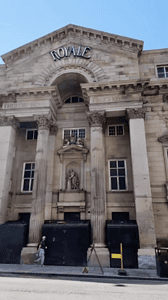
At LBC Exterior Cleaning, we regularly encounter buildings where several generations of paint and protective coatings have been applied over one another. We’ve reoved paint from Iconic buildings such as the Koko Theatre in Camden
One of the biggest surprises for property owners is discovering that removing the modern paint is sometimes the easy part. It’s what lies underneath that creates the real challenges.
We prefer to offer a day rate for paint removal services as even when carrying out an initial sample to establish how many layers of paint there are and what type of paint and coatings might be on the wall. This can vary around different sections of the building. So we might have been able to remove 1m2 of paint back to brick in one area in less than 5 minuites but the same amount could take 10 times as long on a different area of the building.
1. Understanding the Different Types of Paint
Before undertaking any paint removal project, it’s important to identify the type of coating and understand how it interacts with the surface beneath it.
Modern Masonry Paints
Modern masonry paints are commonly applied to brickwork, render and concrete to provide a decorative finish and protection against the weather.
Many are acrylic or other polymer-based coatings designed to adhere strongly to the surface.
Depending on their formulation, age and condition, they can sometimes be removed using specialist chemical strippers, controlled steam cleaning or other appropriate methods.
However, some modern coatings are highly resistant to removal, particularly where multiple layers have been applied.
Oil-Based Paints
Oil-based paints have traditionally been used on timber, metalwork and certain masonry surfaces.
These coatings form a relatively tough film and may require specialist chemical stripping, controlled heating or mechanical removal.
Older coatings can also contain hazardous substances, including lead, making proper testing and safe removal procedures particularly important.
Elastomeric and Waterproof Coatings
These flexible coatings are designed to bridge small cracks and resist water penetration.
Their durability can make them particularly difficult to strip, especially when they have been applied in thick layers.
The removal process may require several stages, and aggressive techniques can risk damaging softer masonry beneath.
Limewash and Traditional Mineral Paints
Limewash is a traditional coating made primarily from lime and water, sometimes with added pigments.
Unlike many modern paints, limewash doesn’t simply form a plastic-like film on the surface. It interacts with compatible mineral substrates and can become integrated with the surface through carbonation.
Limewash is commonly found on older and heritage buildings.
Although weathered limewash can sometimes be removed relatively easily, well-bonded historic layers can prove much more challenging, particularly where multiple applications have built up over decades.
2. The Hidden Challenge: Historic Lime-Based Coatings Beneath Modern Paint
This is where paint removal projects can become particularly interesting.
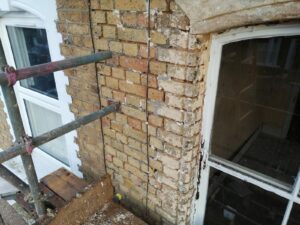
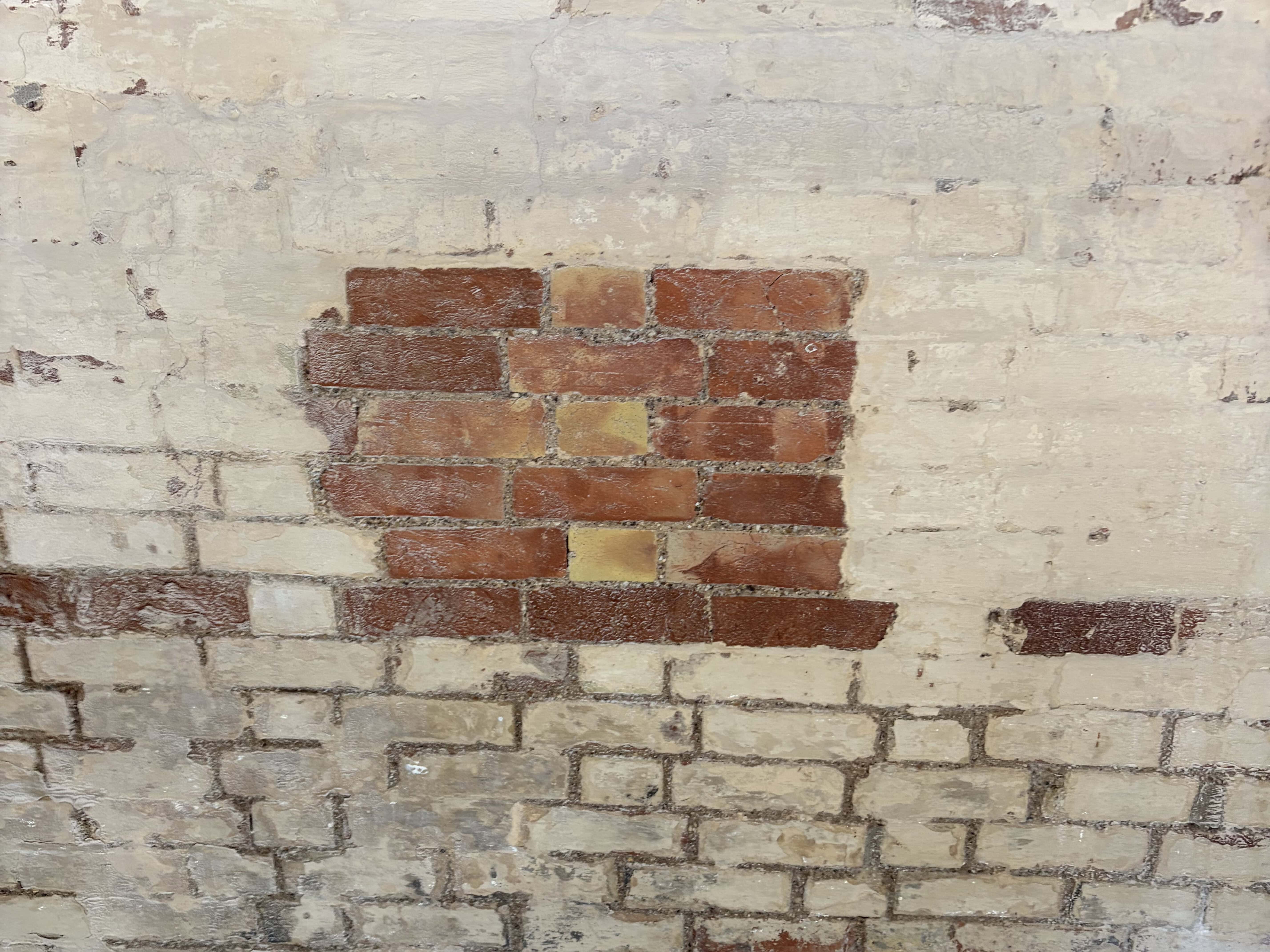
On older buildings, it’s not unusual to discover a hard, mineral-based coating underneath several layers of modern masonry paint.
These coatings may include:
– Traditional limewash built up over many years.
– Lime-based renders or thin lime skim coats.
– Historic lime-based decorative finishes.
– Cementitious or other mineral coatings that have subsequently been painted over.
It’s important to understand that these materials are not all the same.
Limewash, lime render and cement-based coatings have different compositions, bonding characteristics and removal requirements.
In some cases, what initially appears to be an old layer of paint is actually a thin mineral coating bonded directly to the brick or stone.
Why Are These Coatings So Difficult to Remove?
Unlike conventional modern paint, which may soften or release when treated with a suitable chemical stripper, mineral-based coatings often cannot simply be dissolved or peeled away.
They may have bonded into the pores and texture of the original masonry.
Over time, lime-based materials carbonate and harden, becoming a mineral coating rather than a conventional paint film.
Where the coating has developed a particularly strong bond, removing it can require considerably more time and specialist attention.
In some situations, the coating may be harder to remove safely than the modern paint covering it.
This is especially problematic on historic buildings, where the underlying brick or stone may be relatively soft.
These coating can require a soft abrasive method for removal rather than the easier method of paint strippers and steams. For lime based coatings we use the TORC Machine. Its often a slower and more expensive method of removal that using systems such as the DOFF Steam Cleaning Machine
The challenge isn’t necessarily removing the coating at any cost. It’s removing it without damaging the original building fabric.
The way the TORC system works is by using an aggregate that is combinen in a swirling vortex action with air and water. The idea is to use an aggreagte that is more hard than the coating or staining being removed, but less hard than the substrate.
3. Why Paint Removal Can Reveal Unexpected Problems
Imagine a building with three or four layers of modern masonry paint.
A contractor carries out a test patch and successfully removes the outer layers.
However, underneath the paint is a stubborn, hard, off-white mineral coating.
The original quotation may have been based on removing conventional paint, but the remaining material could require a completely different removal process.
This can significantly affect:
– The time required to complete the project.
– The equipment and techniques needed.
– The achievable finish.
– The overall cost of restoration.
It can also mean that completely exposing the original brick or stone is not achievable without unacceptable surface damage.
This is why a small successful paint removal sample doesn’t always guarantee that every underlying coating can be removed to the same standard. Thats why a day rate is often the fairest way o have paint removed.
4. How Can Different Paints and Coatings Be Removed?
There is no universal paint removal method suitable for every building.
At LBC Exterior Cleaning, we assess the substrate, coating type, condition and desired finish before recommending an appropriate approach.
Specialist TORC Cleaning
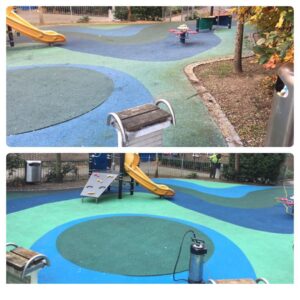
The TORC system uses a controlled combination of water, air and fine abrasive media to remove certain coatings and surface contamination.
It can be particularly useful in specialist masonry restoration projects, including work involving stubborn mineral coatings.
We often use it for;
- Carbon removal from brick and stone
- Graffiti removal from stone
- Lime based coating removal
- Paint Removal
However, the pressure, abrasive selection and application technique must be carefully controlled to avoid damaging the original surface.
TORC cleaning is not automatically suitable for every type of brick or stone.
DOFF & Thermotech Steam Cleaning
DOFF systems use high-temperature water at controlled pressure to remove certain paints, coatings and surface contaminants.
They can be particularly effective for appropriate coatings on compatible substrates.
However, some mineral-based coatings are resistant to steam cleaning alone.
Chemical Paint Stripping
Specialist chemical strippers can be effective on certain modern paints, including acrylic and oil-based coatings.
The chemical must be selected according to the coating and underlying substrate.
Importantly, products designed to break down conventional paint films may have little effect on hard, carbonated lime-based coatings.
Controlled Mechanical or Abrasive Removal
Some particularly stubborn coatings may require carefully controlled mechanical or abrasive techniques.
However, these methods carry a greater risk of altering the surface texture or removing original masonry material.
For heritage buildings, preservation of the underlying surface must always take priority over achieving a completely stripped appearance.
5. Why Sample Patches Are Essential Before Quoting
One of the most important stages of any specialist paint removal project is the initial test patch.
A proper test should establish:
1. What type of paint or coating is present.
2. Whether multiple coating layers exist.
3. Whether lime-based or other mineral coatings are present underneath.
4. Which removal technique produces the safest and most effective result.
5. Whether the original substrate can be exposed without damage.
6. How much time and labour the removal process is likely to require.
Where coatings are layered or inconsistent, more than one test area may be needed.
On older buildings, testing may also be necessary to identify hazardous materials, and conservation advice may be required before proceeding.
A test patch doesn’t just demonstrate whether paint can be removed. It helps establish what finish is realistically achievable and how much work is involved.
6. Why Specialist Paint Removal Can Be More Expensive Than Expected
Paint removal is often priced based on the surface area, access requirements, equipment and expected productivity. It is a slow and time consuming job.
However, two apparently identical buildings can require dramatically different amounts of labour.
One building may have a modern coating that releases relatively easily.
Another may have decades of accumulated coatings, including hard mineral-based layers bonded into the masonry.
The second project could require multiple removal passes, additional testing and significantly slower progress.
This is why professional contractors should avoid promising complete removal before understanding the coating system.
A realistic quotation should explain the expected results, any limitations and the possibility that hidden layers may affect the scope.
7. Protecting the Original Building Fabric
Perhaps the most important consideration is protecting what’s underneath the coating.
Older bricks, natural stone and historic mortar joints can be vulnerable to aggressive cleaning.
Excessive pressure or abrasive action can permanently damage the surface, accelerate weathering and create expensive restoration problems.
In some cases, retaining a well-bonded historic coating may be preferable to attempting complete removal.
The objective should always be to find the most suitable balance between coating removal, appearance and long-term preservation.
Final Thoughts: Not All Paint Removal Is Equal
Paint removal is far more complex than simply choosing a machine and stripping the surface.
Understanding the differences between modern masonry paints, oil-based coatings, limewash and historic mineral finishes is essential.
In particular, discovering lime-based or cementitious coatings beneath modern paint can completely change the complexity of a project.
At LBC Exterior Cleaning we use specialist equipment, including DOFF and TORC systems, to assess and undertake appropriate paint and coating removal projects across London and the surrounding areas.
Our approach focuses on identifying the coating, carrying out suitable testing and protecting the original building materials.
Considering removing paint from brickwork, stone or a historic building?
Contact LBC Exterior Cleaning to discuss your project and arrange an assessment.
Frequently Asked Questions
Can lime-based coatings be removed from brickwork?
Sometimes, yes. However, the success of removal depends on the coating type, thickness, adhesion and condition of the underlying brick. Some coatings cannot be completely removed without surface damage.
Why doesn’t paint stripper remove the white coating underneath my masonry paint?
The white material may be limewash, lime render, cementitious coating or another mineral finish rather than conventional paint. Many chemical paint strippers are designed to act on organic paint binders and may not remove mineral-based coatings.
Can TORC cleaning remove stubborn mineral coatings?
TORC cleaning can be effective on some mineral coatings, but results depend on the material and substrate. A controlled test patch is essential.
Is steam cleaning safe for old brickwork?
Controlled steam cleaning can be suitable for certain historic masonry surfaces, but the condition of the brickwork, mortar and coating must be assessed first.
Why is a test patch important before paint removal?
A test patch helps identify hidden layers, establish achievable results, select an appropriate removal method and provide a more accurate quotation.
How Much does Paint Removal Cost?
For a prodessional company offering paint removal prices can start from £750+vat per day when a single operator can perform the task at hand. This price is increased when access is more complicate dand on jobs where two or more persons are required.
If the TORC machine is required to remove lime based coatings, this work is slower, more messy and involves large air compressors and aggregate. It is also a two man operation and prices can start from £1500+vat per day.